 Canva’s Global ‘The Presentation Paradox’ Study
New research from Canva, the world’s leading visual communication platform, reveals an emerging paradox at the heart of one of work’s age-old skills: even as AI makes presentations easier to create than ever, nearly three in four professionals (74%) still feel anxious about presenting.
Few things are as entrenched as presentations, and decade after decade, they’ve defined how we communicate to clients, teammates, leadership, and beyond. Now, AI is changing them by making them faster and easier to create than ever. Nine in 10 (91%) workers use AI monthly to build slides, mainly for design (57%), brainstorming (56%) and drafting content (49%). 48% say it saves them more than an hour per presentation.
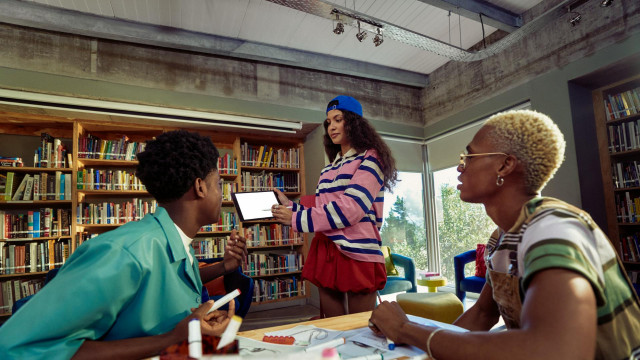
As AI use grows, more than 100 million people create presentations on Canva every month, and it is one of the top use cases for the company’s ChatGPT and Claude integrations, giving Canva a unique view into what comes next. But while the tech is changing fast, one thing remains the same: presenting with confidence is still distinctly human.
“It may be easier to whip up a presentation these days, but the part that matters most isn’t the slides. It still takes a person’s ability to persuade, teach, inspire, or move someone else to act. More than ever, the slides are there to support the presenter, not the other way around.”
- Alli McKee, Head of Visual Suite, Canva.
Canva’s new global study, The Presentation Paradox, explores how AI presentation tools are changing the way we work, finding that as slide creation gets easier with AI, presenting with confidence is becoming more important for climbing the career ladder. More than three in four professionals (77%) say presentation confidence has contributed to career growth in the past year, with 68% linking it to a promotion or pay rise.
AI Helps Build Presentations, But Humans Win the Room
As AI reimagines the entire presentation process, people are still figuring out where it can help, and where they still want to take the lead. Half (51%) now start every presentation with an AI draft, but when it comes to delivering it, things get more nuanced.
Three in four (76%) use AI to prepare, but live delivery remains deeply human:
·86% say great presentations still come down to human connection and presence
·75% say building trust with an audience is still a human’s job
·71% trust AI to build slides, but not to present or tell the story
As AI levels the playing field on slide generation, it is also raising the bar for presenters. More than two-thirds (68%) say an AI-built deck can hurt a presentation if the delivery does not match.
When Presentation Nerves Create an Alter Ego
Person-to-person connection wins the room, but it doesn’t always come naturally. Nerves kick in, and many workers say they become a different version of themselves to hide how unconfident they feel. Nearly all (95%) consciously change how they communicate when presenting, with 85% switching into a different “Presenter Persona.” Younger workers do it most: 94% of Gen Z and 90% of Millennials, compared to 70% of Boomers.
For some, that alter ego is a performance boost: 67% say they become more extroverted and confident. For others, it has the opposite effect, with 53% reporting lower energy or becoming more introverted.
Years of remote and asynchronous work have left many professionals used to communicating behind a screen, with fewer chances to learn how to read a room, hold attention, and practice presenting in person:
·74% feel anxious presenting, rising to 90% of Gen Z, compared to 56% of Boomers
·34% say remote work has left them out of practice
·51% feel more confident behind a screen than in a room, rising to 62% of Gen Z versus 32% of Boomers
That confidence gap may be holding some workers back at exactly the moment presentation skills are helping others climb the career ladder. Four in five (80%) say in-person presentation skills are a competitive edge in the AI era, and 54% say they signal leadership potential. Confident presenters are already reaping the benefits:
·68% link it to a recent promotion or pay rise
·77% say it has opened the door to more visible or high-stakes work
·77% say it has contributed to their career growth in the past year
AI’s Next Act: From Slide Builder to Presentation Coach
With more people working remotely, AI is becoming the new rehearsal room. People want to stay in control of the delivery, but that doesn’t mean preparing alone. More than half (53%) now use AI as a presentation coach:
·45% get feedback on a draft
·41% anticipate audience questions
·34% generate speaker notes
·28% role-play a boss or colleague to practice
·28% review recordings of themselves presenting
·18% use AI live during a presentation
“In a perfect world, I wish AI could deliver the presentation for me; otherwise, I would like real-time feedback while practicing my presentation.”
- Canva Research Participant, U.S.
Some are also ready to let AI further into the room:
·55% would let an AI avatar present for them
·61% think AI will eventually coach them live during a presentation
·75% find AI-generated speaker notes on screen acceptable
·71% would let AI watch the crowd and suggest changes in real time
·65% would take real-time prompts through an earpiece
As AI reshapes how we present, Canva supports the entire end-to-end AI creation and presenting process, from the spark of an idea to final delivery. Built into Canva’s Visual Suite, Canva AI turns rough concepts into polished, on-brand slides through a simple conversation, while staying fully editable and collaborative. When it’s time to present, AI-powered speaker notes help guide what to say, timing insights help you stay on track, and remote control lets you move freely while presenting, all designed to help people communicate their ideas with confidence. For more information on how to access Canva’s Visual Suite, visit www.canva.com/canva-business/
Methodology
Canva conducted this research using an online survey prepared by Method Research and distributed by PureSpectrum among n=4,000 adults (age 18+) who are employees and have delivered a workplace presentation at least once in the last month. The survey included a sample of n=1,000 in each region: United States, LATAM (Mexico, Brazil), EU (Germany, France, Spain), APAC (South Korea, Indonesia). The sample was equally split between gender, with a spread of age groups, race groups, and geographies represented. Data was collected from June 18 to July 1, 2026.